

Event Space Capacity Calculator
How Many Guests Fit in Your Venue?
Event Space Capacity Calculator
Free event space capacity calculator. Determine maximum guests for any venue based on room dimensions and seating style. Banquet, theater, or cocktail.
Event Space Capacity Calculator — How Many Guests Fit in Your Venue?
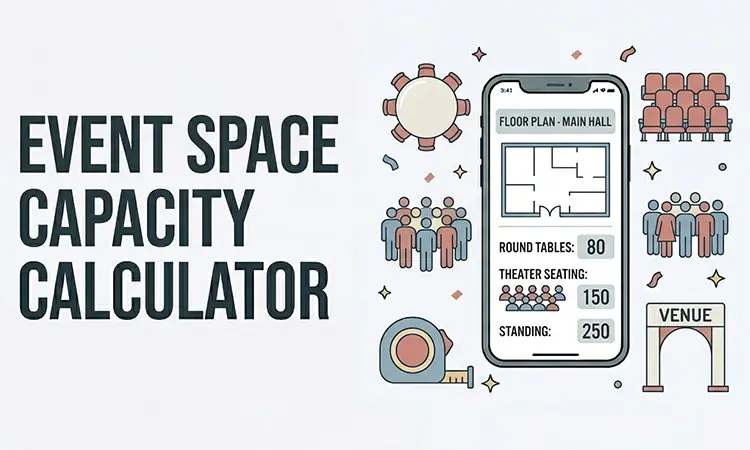
Planning an event and need to know how many guests fit in a room? Our event space capacity calculator helps you determine the maximum number of attendees your venue can comfortably hold based on room dimensions and seating style. Whether you are organizing a wedding reception, corporate conference, banquet dinner, or cocktail party, knowing your venue's true capacity is essential for safety, comfort, and event success.
Unlike basic room capacity calculators that only use square footage, ours lets you select from four seating styles — theater, banquet, reception, and classroom — each with different space requirements per person. The calculator also allows custom square-foot-per-person input for unique layouts. For a complete event planning toolkit, also try our catering quantity calculator to estimate food and drinks, and our party budget calculator to track expenses.
How to Use the Event Space Capacity Calculator
- Enter the room length in feet — measure the longest wall of your event space.
- Enter the room width in feet — measure the shorter wall.
- Select the seating style — theater, banquet, reception/cocktail, or classroom. Each style has a default square-foot-per-person value, which you can adjust.
- Enter square feet per person — the calculator pre-fills a recommended value based on your seating choice, but you can customize it for unique layouts.
- Click "Calculate" to see the maximum number of people your space can accommodate.
Seating Style Space Requirements
- Theater Style: 8–10 sq ft per person — rows of chairs facing a stage. Best for presentations, ceremonies, and lectures.
- Banquet Style: 12–14 sq ft per person — round tables with chairs. Ideal for dinners, weddings, and galas.
- Reception / Cocktail: 6–8 sq ft per person — standing room with high-top tables. Perfect for networking events and cocktail hours.
- Classroom Style: 15–18 sq ft per person — tables with chairs facing forward. Great for training sessions and workshops.
Example Calculation
Suppose you are organizing a wedding reception in a banquet hall measuring 60 feet long by 40 feet wide with banquet-style seating (12 sq ft per person):
- Room Length: 60 ft
- Room Width: 40 ft
- Total Area: 60 × 40 = 2,400 sq ft
- Seating Style: Banquet (12 sq ft/person)
Result: 2,400 ÷ 12 = 200 guests maximum. However, this is the raw number — you should also account for a dance floor, buffet tables, bar area, and DJ booth, which reduce available guest space. A good rule of thumb is to subtract 10–20% for these additional elements, bringing the comfortable capacity to 160–180 guests.
Factors That Affect Venue Capacity
- Dance Floor: Plan 3–4 sq ft per dancing guest (about 30–40% of guests will dance). A 12'×12' floor accommodates 36–48 dancers.
- Buffet Tables: Allow 8–10 linear feet per 100 guests for buffet tables. This reduces available seating space.
- Bar Area: Plan 10 linear feet per 100 guests for a bar. Position it away from food stations to avoid congestion.
- Stage or Head Table: A stage for a band or DJ, plus a head table for the wedding party, can consume 200–400 sq ft.
- Fire Code Regulations: Always check local fire codes — they may impose a stricter maximum occupancy than your space calculation.
When Would You Use an Event Space Capacity Calculator?
- Wedding Planning: Determine how many guests your reception venue can seat for dinner and dancing. Make informed decisions about your guest list before booking.
- Corporate Events: Plan conference seating, breakout rooms, and networking areas. Ensure your venue meets capacity requirements for keynotes and workshops.
- Private Parties: Host birthdays, anniversaries, and holiday gatherings with confidence — know exactly how many people your home or rented space can hold.
- Community Events: Organize fundraisers, charity galas, and community meetings. Comply with local occupancy limits for public gatherings.
Frequently Asked Questions
How many guests fit in a room?
Depends on seating style. Theater: 8–10 sq ft/person. Banquet (round tables): 12–14 sq ft/person. Cocktail (standing): 6–8 sq ft/person. Classroom: 15–18 sq ft/person.
What is the best seating style for my event?
Theater: presentations, ceremonies. Banquet: dinners, receptions. Cocktail: networking, casual gatherings. Classroom: training, workshops. Choose based on event purpose and guest interaction needs.
How much space for a dance floor?
Plan 3–4 sq ft per dancing guest (about 30–40% of guests will dance). A 12'×12' floor fits 36–48 dancers. Position the dance floor near the DJ/band, away from food stations.
What about space for buffet tables and bars?
Include 8–10 linear feet per 100 guests for buffet tables. Bar: 10 linear feet per 100 guests. These reduce available guest seating space. Factor them in before calculating capacity.
If this tool does not work properly or results differ from expectations, contact us to report the issue. We are happy to help.
Related Event Planning Calculators