How Many Calories Should I Eat a Day? Use Our Free Calculator
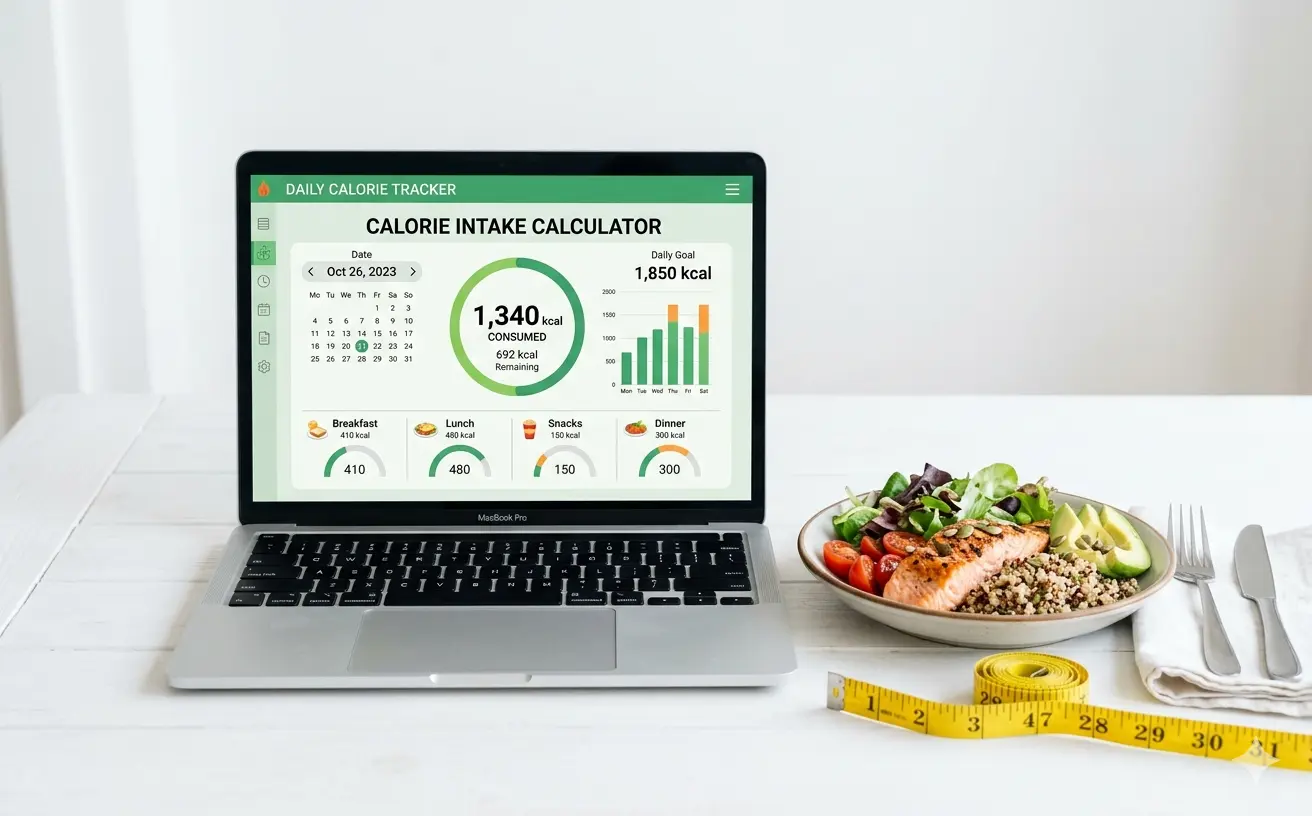
If you have ever asked yourself, "How many calories should I eat a day?" — you are not alone. Millions of people search this exact question every month, and for good reason. Whether you want to lose weight, build muscle, or simply maintain a healthy lifestyle, knowing your daily calorie target is the single most important piece of the nutrition puzzle.
The answer is not one-size-fits-all. Your ideal calorie intake depends on your age, weight, height, gender, and how active you are. A 25-year-old athlete and a 50-year-old office worker have very different calorie needs. That is why we built our free Calorie Intake Calculator — to give you a personalized answer in seconds, no math required.
What Is TDEE? (Total Daily Energy Expenditure Explained)
When people search for how many calories they should eat daily, they are really asking about their Total Daily Energy Expenditure (TDEE). This is the total number of calories your body burns in a 24-hour period, including everything from breathing and digesting food to walking, working out, and even fidgeting at your desk.
Your TDEE is made up of three main components:
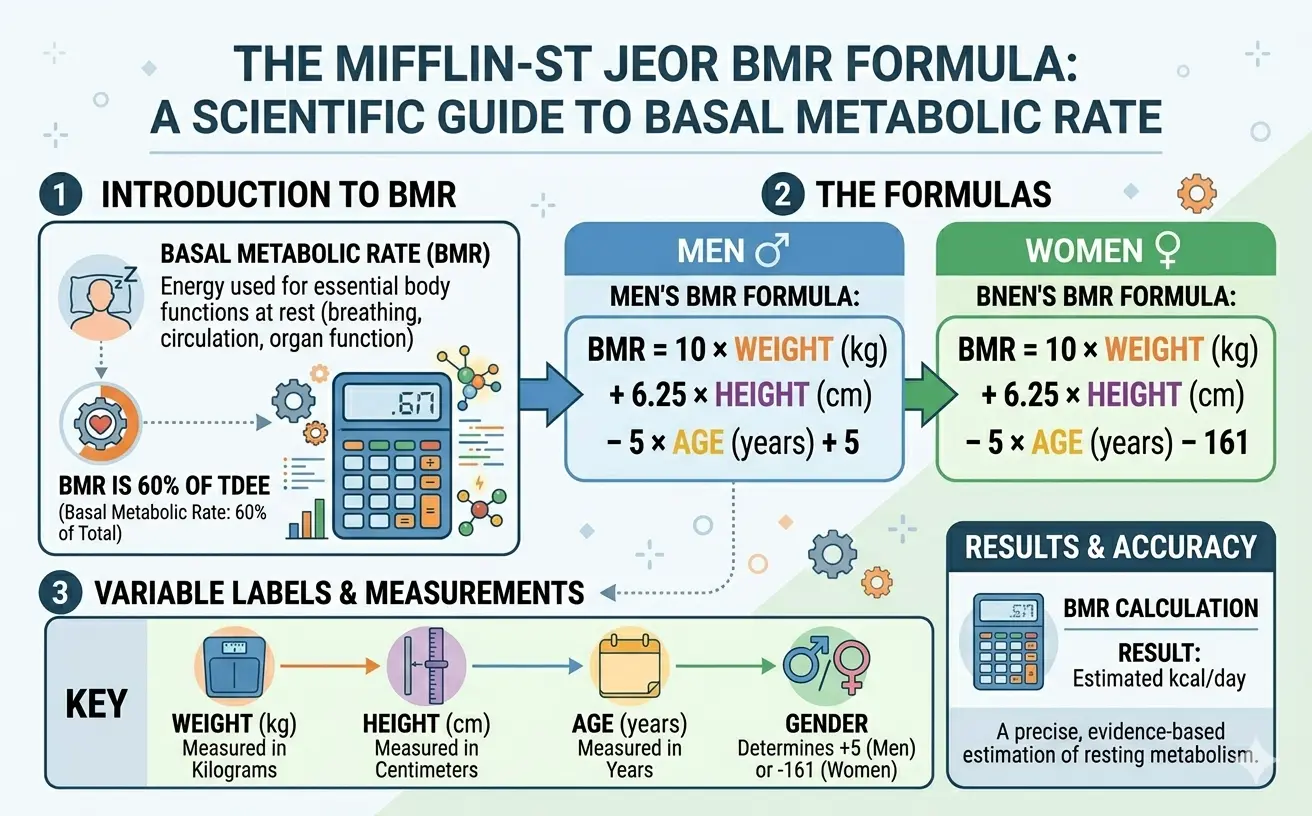
- Basal Metabolic Rate (BMR): The calories your body burns at complete rest just to keep you alive — heart beating, lungs breathing, cells repairing. BMR accounts for roughly 60-70% of your total calorie burn.
- Thermic Effect of Food (TEF): The energy your body uses to digest, absorb, and process the food you eat. This makes up about 10% of your daily burn.
- Physical Activity: Everything from planned exercise to non-exercise activity like walking to your car or doing household chores. This is the most variable part of the equation.
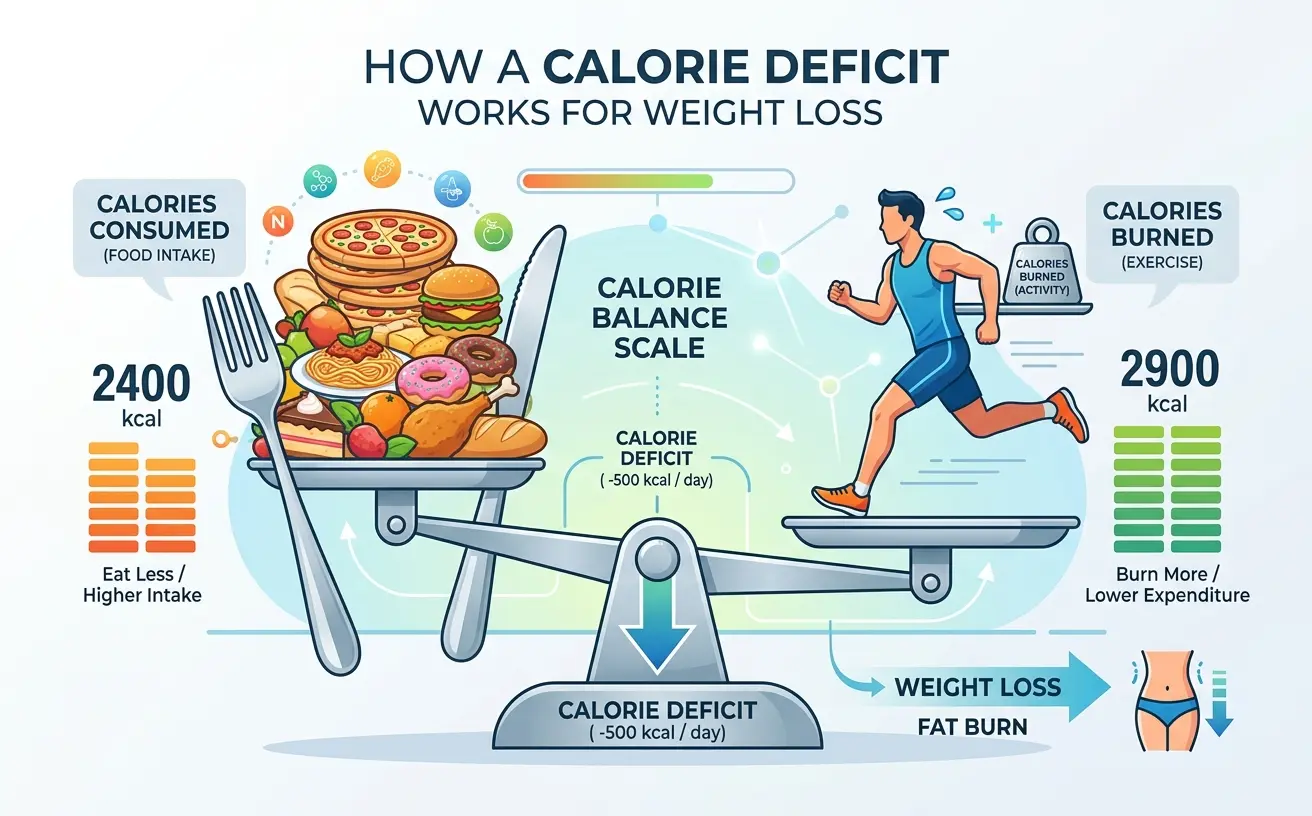
Once you know your TDEE, everything becomes clear. Eat fewer calories than your TDEE, and you lose weight. Eat more, and you gain weight. Eat right at your TDEE, and you maintain. It really is that simple.
How Our Calorie Intake Calculator Works
Our calculator uses the Mifflin-St Jeor equation — widely recognized by dietitians and researchers as the most accurate formula for estimating BMR in the general population. Multiple studies have shown it outperforms the older Harris-Benedict equation, making it the gold standard for calorie estimation.
Here is exactly what happens when you use our tool:
- You enter your weight in kilograms (if you only know pounds, divide by 2.2 to convert).
- You enter your height in centimeters (inches multiplied by 2.54 gives you centimeters).
- You enter your age — because BMR naturally declines with age.
- You select your gender — men and women have different metabolic equations.
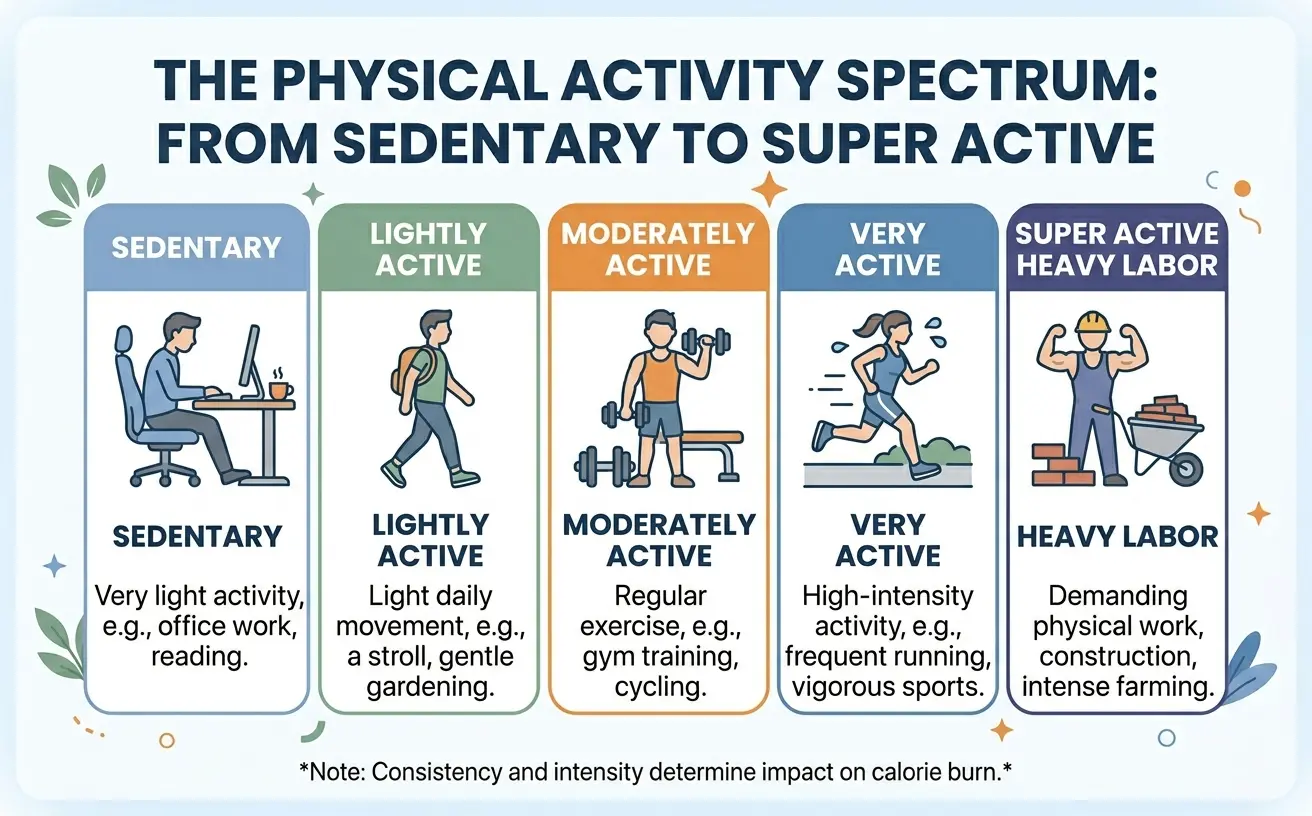
- You choose your activity level from five clear options ranging from sedentary to super active.
- You click calculate — and get your personalized daily calorie target instantly.
The result shows your estimated maintenance calories. From there, you can easily adjust up or down depending on whether your goal is weight loss, muscle gain, or weight maintenance.
How Many Calories Should I Eat a Day to Lose Weight?
This is the natural follow-up question, and it is an important one. The general rule of thumb is that a daily deficit of 500 calories below your maintenance level leads to approximately one pound of weight loss per week. This pace is considered safe and sustainable by most health organizations.
Here is what that looks like in practice:
- A moderately active 30-year-old woman weighing 70 kg and standing 165 cm tall has a TDEE of roughly 2,100 calories per day.
- To lose one pound per week, she would aim for 1,600 calories per day.
- This creates a 500-calorie daily deficit without being so low that she feels hungry or nutrient-deprived.
However, there are important safety floors. Most health experts recommend that women should not go below 1,200 calories per day and men should not go below 1,500 calories per day without medical supervision. Going too low can slow your metabolism, cause nutrient deficiencies, and lead to muscle loss rather than fat loss. For a complete breakdown of recommended ranges, see our guide on safe calorie deficit for men and women.
If you are just getting started with weight loss, our complete guide on how many calories to lose weight safely covers everything from setting your first goal to adjusting as you progress.
For a more complete picture of your health metrics, pair our calorie calculator with our free BMI Calculator to check if you are in a healthy weight range for your height.
How Many Calories Should I Eat a Day to Gain Muscle?
If your goal is muscle gain rather than weight loss, you need a calorie surplus — meaning you eat more than your TDEE. For most people, a surplus of 300-500 calories per day is ideal for supporting muscle growth while minimizing excess fat gain.
Combined with a solid strength training program and adequate protein intake, this surplus provides the extra energy your body needs to build new muscle tissue. If building muscle is your primary goal, check out our full guide on how to calculate calorie intake for muscle gain, including protein targets and meal timing strategies. Also try our free Daily Protein Intake Calculator to make sure you are getting enough protein to support recovery and growth.
What Activity Level Should I Choose?
Choosing the correct activity level is critical for an accurate result. Many people overestimate how active they are. Here is a simple guide:
- Sedentary: You have a desk job and do little to no structured exercise. You walk less than 5,000 steps per day. Most of your time is spent sitting.
- Lightly Active: You do light exercise or walking 1-3 days per week. You might take short walks during lunch or do gentle yoga a couple of times weekly.
- Moderately Active: You exercise 3-5 days per week with moderate intensity. You go to the gym, run, swim, or play sports regularly. Most active people fall here.
- Very Active: You train hard 6-7 days per week. You are an athlete, a fitness enthusiast with a demanding routine, or someone with a physically active job.
- Super Active: You have a physically demanding job AND you train intensely. Think construction workers who also do CrossFit, or professional athletes in season.
When in doubt, choose the lower activity level. It is better to slightly underestimate your calorie burn and adjust upward later than to overestimate and wonder why you are not seeing results.
Why the Mifflin-St Jeor Equation Matters
Not all calorie calculators are created equal. Many free online tools still use the Harris-Benedict equation from 1919, which research has shown can overestimate BMR by 5-10% in modern populations. Our calculator uses Mifflin-St Jeor, which was developed in 1990 and validated across larger, more diverse study groups.
Here are the actual formulas we use behind the scenes:
- For Men: BMR = (10 × weight in kg) + (6.25 × height in cm) − (5 × age) + 5
- For Women: BMR = (10 × weight in kg) + (6.25 × height in cm) − (5 × age) − 161
Your BMR is then multiplied by your selected activity factor to arrive at your total daily calorie needs. This two-step process ensures your result is as personalized and accurate as possible.
Common Mistakes When Calculating Daily Calorie Needs
Even with a reliable calculator, people sometimes get misleading results because of these common errors:
- Overestimating activity level: If you sit at a desk 8 hours a day and hit the gym for 45 minutes three times a week, you are likely moderately active at most — not very active.
- Using pounds instead of kilograms: Our calculator uses metric units. One kilogram equals 2.2 pounds. Make sure to convert before entering.
- Forgetting to recalculate after weight changes: As you lose or gain weight, your calorie needs change too. A 200-pound person burns more calories than a 170-pound person doing the same activities. Recalculate every 10-15 pounds of change.
- Ignoring non-exercise activity: Steps taken while shopping, cleaning, or playing with your kids add up. Someone who walks 10,000 steps daily but never "works out" may still be moderately active.
Putting It All Together: Your Daily Calorie Action Plan
Here is a simple step-by-step plan to start using your calorie target today:
- Calculate: Use our free Calorie Intake Calculator to find your maintenance calories.
- Set your goal: Subtract 500 calories for weight loss, add 300-500 for muscle gain, or stay at maintenance.
- Track for one week: Use a food diary or app to see if you are hitting your target. Do not obsess over every single calorie — consistency matters more than perfection.
- Monitor results: Weigh yourself once a week under the same conditions. If the scale is not moving in the direction you want after 2-3 weeks, adjust by 100-200 calories.
- Recalculate regularly: Return to the calculator every 4-6 weeks or after significant weight changes to keep your target accurate.
Related Guides: Dive Deeper Into Calorie Counting
Want to learn more? Explore our complete library of calorie and nutrition guides:
- Daily Calorie Calculator: How to Calculate Your Calorie Needs — A step-by-step walkthrough of BMR and TDEE.
- Calorie Calculator for Weight Loss — Set up your deficit the right way.
- Mifflin-St Jeor Equation Explained — The science behind the formula.
- Activity Level Multipliers Explained — How to choose the right TDEE factor.
Frequently Asked Questions
How many calories should I eat a day to lose belly fat?
You cannot spot-reduce fat from specific areas. To lose belly fat, create a consistent calorie deficit of 300-500 calories per day below your TDEE. Combine this with strength training and adequate protein to preserve muscle. Over time, your body will draw from fat stores across your entire body — including your midsection.
Does the calorie calculator work for teenagers?
Our calculator is designed for adults aged 18 and older. Teenagers have different caloric needs due to growth and development. If you are under 18, consult a doctor or registered dietitian for personalized nutrition guidance rather than relying on online calculators.
How accurate is a calorie intake calculator?
The Mifflin-St Jeor equation predicts BMR within approximately 10% of laboratory-measured values for most healthy adults. It serves as an excellent starting point, but individual variations in metabolism, muscle mass, and genetics mean you should treat the result as an estimate and adjust based on real-world results.
Should I eat back the calories I burn from exercise?
This depends on your goal. If you are trying to lose weight, eating back all your exercise calories can cancel out your deficit. However, if you are very active and training for performance, you may need extra fuel. A balanced approach is to eat back about half of estimated exercise calories and monitor how your body responds.
How many calories should I eat a day while pregnant or breastfeeding?
Pregnancy and breastfeeding significantly increase calorie needs — typically by 300-500 calories per day. Our standard calculator is not designed for these conditions. Always follow the guidance of your healthcare provider for nutrition during pregnancy and lactation.

Ready to Find Your Personal Calorie Target?
You now have everything you need to answer the question, "How many calories should I eat a day?" — but the real answer is personal to you. Your age, your body, your activity level, and your goals all play a role. A generic number you read online will never be as accurate as a calculation based on your actual details.
Take 30 seconds and try our free Calorie Intake Calculator now. Get your personalized daily target, and take the first step toward a healthier, more informed approach to nutrition. No sign-up required. Instant results.
For a complete picture of your health, also explore our related calculators:
- BMI Calculator — Check if you are in a healthy weight range.
- Daily Protein Intake Calculator — Find out how much protein you need.
- Water Intake Calculator — Calculate your daily hydration needs.