Calories Per Day to Lose Weight: Safe Deficit Guide for Men & Women
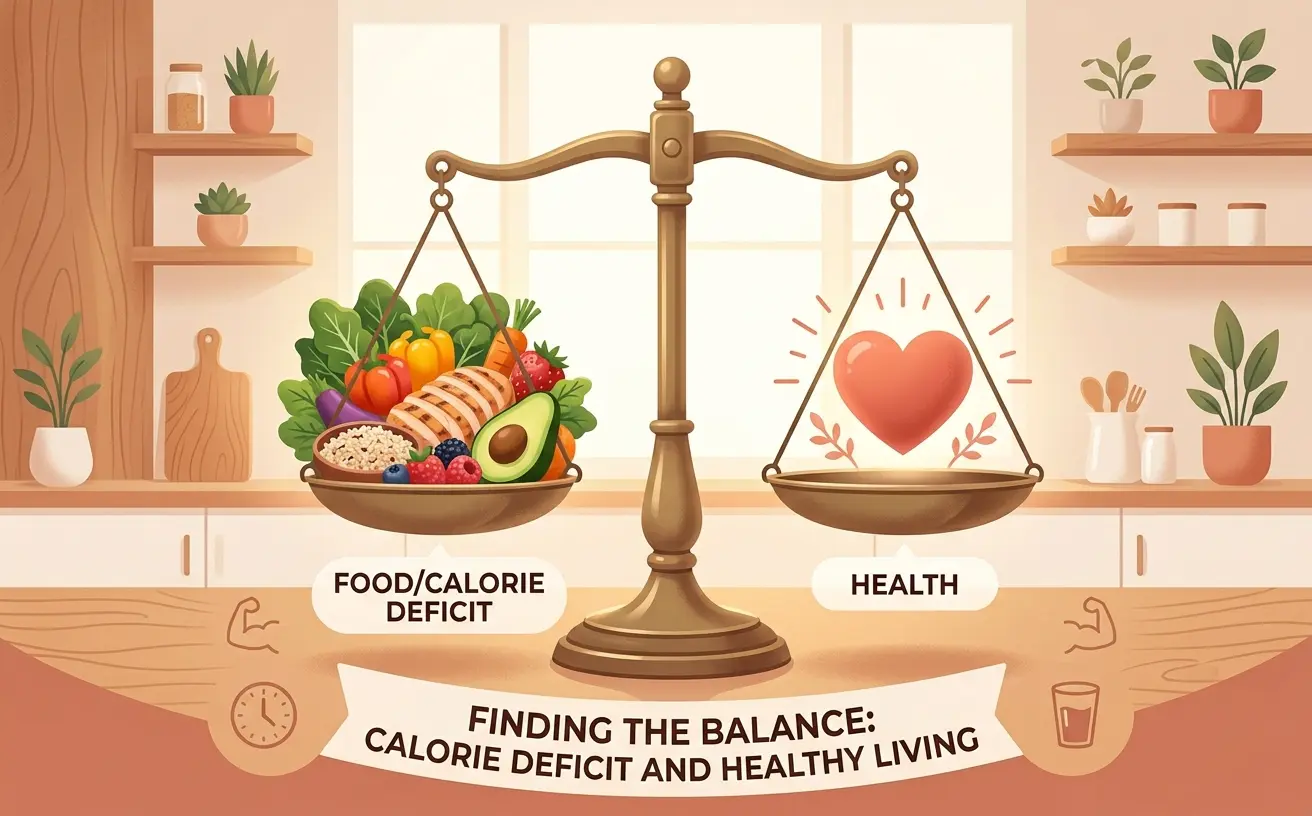
There is a dangerous myth in the weight loss world that eating less is always better. Cut more calories, lose more weight, get faster results. This logic falls apart when your calorie intake drops below a critical threshold. At that point, your body does not just burn fat — it breaks down muscle, slows your metabolism, and can cause serious health problems that take months to reverse.
Knowing your safe minimum calorie intake is just as important as knowing your maintenance TDEE. In this guide, we cover exactly how low you can go without risking your health, why these limits exist, and how to spot the warning signs that your deficit is too aggressive. To find your personal safe weight loss target, use our free calorie intake calculator — it calculates your maintenance calories so you can subtract a safe deficit without guessing.
What Is a Safe Calorie Deficit?
A safe calorie deficit is one that produces steady, sustainable weight loss without triggering the negative effects of under-eating. For most people, this means a daily deficit of 300 to 500 calories below their TDEE, leading to a weight loss rate of approximately 0.25 to 0.5 kilograms per week.
This pace allows your body to burn fat while preserving muscle mass, maintaining energy levels, and supporting normal hormonal function. It also gives you enough room to eat a nutritionally complete diet without constant hunger. For the complete methodology behind calculating your TDEE before setting a deficit, read our guide on how to calculate your daily calorie needs.
Minimum Calorie Limits: The Numbers You Should Not Cross
These are the widely accepted minimum daily intake levels recommended by health organizations including the National Institutes of Health and the Academy of Nutrition and Dietetics:
⚠️ Critical Safety Thresholds
Most medical professionals agree that your daily intake should never drop below these baseline limits without direct clinical supervision:
- Women: Minimum of 1,200 calories per day.
- Men: Minimum of 1,500 calories per day.
Going below these baselines risks triggering a severe metabolic slowdown, nutritional deficiencies, and muscle tissue wasting.
These numbers are not arbitrary. They are based on the minimum amount of energy and nutrients the human body needs to perform basic functions. A 1,200-calorie diet for a woman provides just enough room to include adequate protein, essential fats, fiber, vitamins, and minerals — and even then, it requires careful food selection to meet all nutritional needs.
What Happens When You Eat Too Little?
Dropping below the safe minimum does not just accelerate weight loss. It triggers a cascade of physiological responses that work against your goals:
- Metabolic slowdown: Your body senses starvation and reduces its calorie burn to conserve energy. Your TDEE drops, meaning you need to eat even fewer calories to maintain the same deficit. This is why extreme dieters often plateau quickly.
- Muscle loss: When calories are scarce, your body breaks down muscle tissue for energy alongside fat. Since muscle burns more calories than fat at rest, losing muscle further reduces your metabolism.
- Nutrient deficiencies: It is extremely difficult to meet your requirements for iron, calcium, B vitamins, and other essential nutrients on fewer than 1,200 calories. Deficiencies can cause fatigue, hair loss, weakened immunity, and brittle bones.
- Hormonal disruption: Very low-calorie diets can disrupt thyroid function, reduce testosterone in men, and cause amenorrhea — the loss of menstrual periods — in women. These hormonal changes affect mood, energy, and long-term health.
- Increased binge eating risk: Extreme restriction often leads to intense cravings and loss of control around food. The restrict-binge cycle is physically and psychologically damaging.
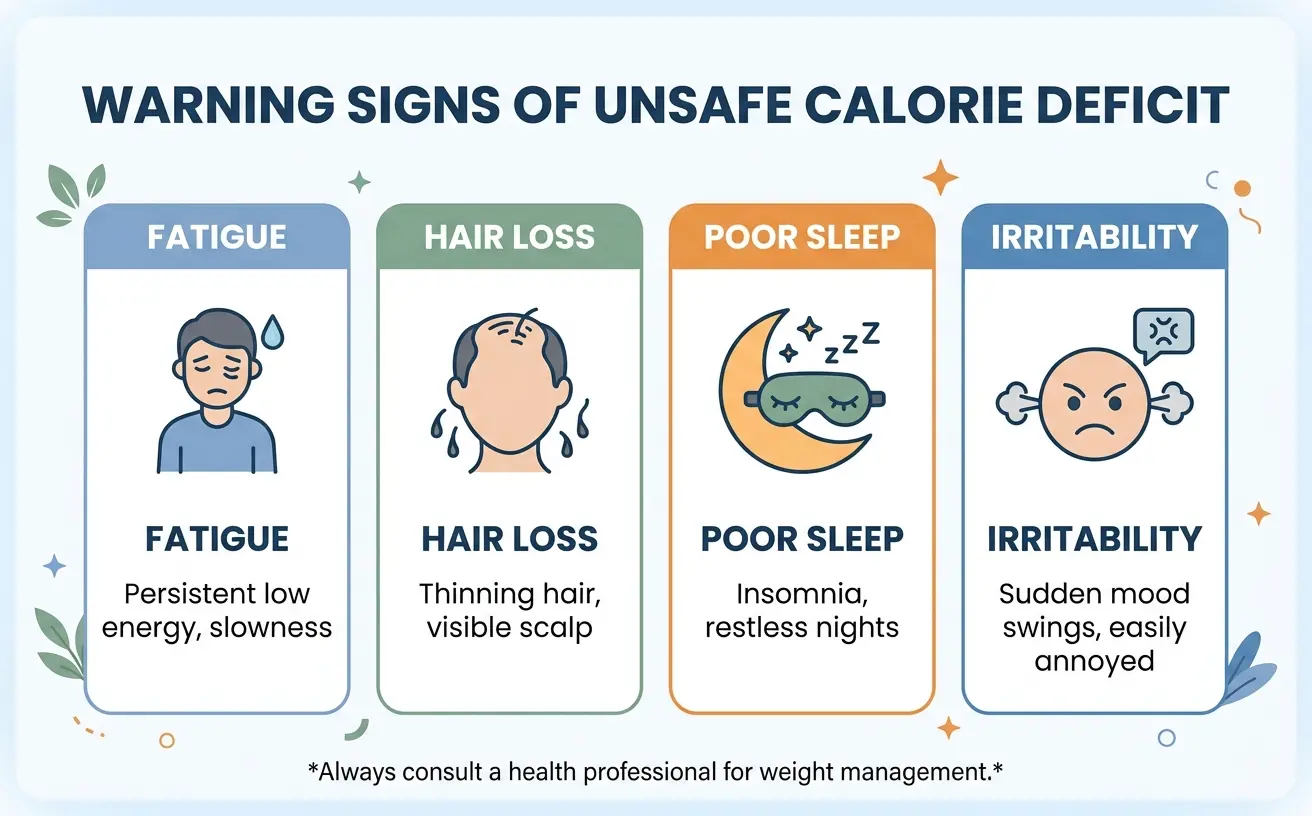
If you are experiencing persistent fatigue, constant hunger that never goes away, irritability, poor sleep, or an inability to concentrate, your deficit may be too aggressive. Increase your intake by 100 to 200 calories and reassess after a week. For the full picture on setting up a healthy weight loss plan, read our guide on how many calories to lose weight safely.
Why 1,200 and 1,500? The Science Behind the Numbers
These minimums are not pulled from thin air. Here is the nutritional logic behind each:
Why 1,200 Calories for Women?
The average woman needs approximately 1,200 to 1,400 calories just to meet her baseline nutritional requirements — protein for muscle maintenance, fat for hormone production, carbohydrates for brain function, and a full spectrum of vitamins and minerals. Below 1,200 calories, it becomes nearly impossible to eat a varied enough diet to cover all of these needs without supplementation. This is why very low-calorie diets require medical supervision to monitor for deficiencies.
Why 1,500 Calories for Men?
Men generally have more lean body mass than women, which requires more energy to maintain. They also have higher baseline requirements for certain nutrients. At 1,500 calories, a man can reasonably meet his protein, fat, and micronutrient needs with careful meal planning. Below that, muscle loss accelerates and metabolic adaptation becomes a significant concern.
Exceptions to the Rule
These minimums are general guidelines for healthy adults. Certain populations may have different needs:
- Very short, sedentary women: A woman under 5 feet tall who is older and sedentary may have a TDEE as low as 1,400 calories. In this case, a weight loss target of 1,100 to 1,200 calories might be appropriate, but only under medical guidance.
- Very tall, active men: A 6-foot-4 man with a physically demanding job may have a TDEE above 3,500 calories. His safe weight loss target might be 2,500 to 3,000 calories — far above the 1,500 minimum.
- Medically supervised very low-calorie diets: Diets of 800 calories or fewer exist, but they are prescribed for people with obesity-related health conditions and include medical monitoring and nutritional supplementation.
Safe Weight Loss Rates: How Fast Is Too Fast?
Your calorie deficit determines your rate of weight loss. Here is what different rates mean for your body:
| Weekly Loss | Daily Deficit | Safety Level | Best For |
|---|---|---|---|
| 0.25 kg (0.5 lb) | ~250 calories | Very Safe | People close to goal weight, preserving muscle |
| 0.5 kg (1 lb) | ~500 calories | Safe | Most people; recommended by CDC and NHS |
| 0.75–1 kg (1.5–2 lb) | ~750–1,000 calories | Caution | People with significant weight to lose; monitor closely |
| 1+ kg (2+ lb) | >1,000 calories | Risky | Medical supervision only |
The sweet spot for most people is 0.25 to 0.5 kilograms per week. This pace is slow enough to be sustainable but fast enough to see progress on the scale each month. For a detailed calorie calculator designed specifically for weight loss, see our calorie calculator for weight loss guide.
How to Know If Your Deficit Is Too Aggressive
Your body sends clear signals when you are undereating. Here are the warning signs to watch for:
- Constant fatigue: You wake up tired and stay tired all day, regardless of how much you sleep.
- Persistent hunger: You are hungry all the time, not just before meals. Cravings feel uncontrollable.
- Poor workout performance: Your lifts are stalling or decreasing despite consistent training.
- Irritability and mood swings: You are snapping at people, feeling anxious, or experiencing low mood.
- Poor sleep: You have trouble falling asleep or wake up frequently during the night.
- Hair thinning: Noticeable hair loss can indicate nutrient deficiencies from prolonged under-eating.
- Frequent illness: A weakened immune system makes you more susceptible to colds and infections.
- Loss of menstrual cycle: Women who under-eat for extended periods may stop menstruating.
If you experience more than two of these symptoms consistently, your deficit is likely too aggressive. Increase your daily intake by 200 to 300 calories immediately and monitor how you feel over the next week. Weight loss should improve your health, not damage it.
How to Create a Safe Deficit Without Extreme Restriction
A safe calorie deficit does not mean you have to be hungry all the time. Here are strategies to eat fewer calories while staying full and satisfied:
- Increase protein intake: Protein is the most filling macronutrient. Aim for 1.6 to 2.2 grams per kilogram of body weight. Use our daily protein intake calculator to find your target.
- Fill up on vegetables: Vegetables provide volume and fiber for very few calories. Half your plate should be vegetables at lunch and dinner.
- Drink enough water: Dehydration can mimic hunger. Try our water intake calculator to find your daily hydration goal.
- Prioritize sleep: Poor sleep increases hunger hormones and decreases willpower. Aim for 7 to 9 hours per night.
- Plan your meals: People who plan meals in advance tend to make better choices than those who decide in the moment. Spend 10 minutes each evening planning tomorrow's food.
- Include treats in moderation: A completely restrictive diet is hard to sustain. Allowing a small treat — 100 to 200 calories — each day can help you stick to your plan long-term.
Frequently Asked Questions
Can I eat less than 1,200 calories if I am not hungry?
Even if you do not feel hungry, your body still needs a minimum amount of nutrients that is very difficult to get below 1,200 calories. Lack of hunger can sometimes be a sign that your hunger signals are dysregulated from chronic under-eating, not that your body needs less food. If you consistently feel full on very few calories, consult a doctor to rule out underlying issues.
What if I am short and my TDEE is already low?
Shorter women, particularly those who are older and sedentary, may have a TDEE of 1,400 to 1,600 calories. A 500-calorie deficit would put them below 1,200. In this case, accept a slower rate of weight loss with a 200 to 300 calorie deficit instead. Losing 0.25 kilograms per week is still progress. Alternatively, increase your activity level to raise your TDEE, which allows a larger deficit while staying above the minimum.
Are very low-calorie diets ever safe?
Yes, but only under medical supervision. Medically supervised very low-calorie diets of 800 calories or fewer are sometimes prescribed for people with obesity-related health conditions where rapid weight loss is medically necessary. These programs include regular blood tests, nutritional supplementation, and monitoring by healthcare professionals. They are not safe to attempt on your own.
How do I know if my metabolism has slowed from dieting?
Signs include feeling cold when others are comfortable, unexplained fatigue, a plateau in weight loss despite eating very little, and regaining weight quickly when you increase calories even slightly. If you suspect metabolic adaptation, gradually increase your calories by 50 to 100 per week until you reach a sustainable maintenance level, and consider working with a dietitian.
Should men and women really have different minimums?
Yes. These differences reflect average variations in body size, muscle mass, and nutrient requirements between genders. Men generally have more lean body mass, which requires more energy to maintain, even at rest. The 1,500-calorie minimum for men and 1,200-calorie minimum for women are based on decades of clinical nutrition research and are endorsed by major health organizations worldwide.
Related Guides: Complete Your Calorie Safety Knowledge
Understanding safe limits is essential. Pair this guide with our other in-depth resources:
- How Many Calories Should I Eat a Day? — The complete beginner's guide to daily calorie targets.
- Mifflin-St Jeor Equation Explained — The science behind the baseline metabolic formulas.
- How to Calculate Calorie Intake for Muscle Gain — The complete bulking framework for lean muscle growth.
- Activity Level Multipliers Explained — Choose the right TDEE factor for accurate results.
Find Your Safe Weight Loss Target Now
You now know the minimums, the warning signs, and the safe rates of weight loss. The next step is to calculate your personal numbers. Use our free calorie intake calculator to find your maintenance TDEE, subtract a safe deficit, and start losing weight without risking your health. No sign-up, no cost, instant results.